A Moveable Feast by Ernest Hemingway

A few of you told me to read this when I mentioned my affection for The Sun Also Rises. You were right.

As you may have noticed, I’m in Paris right now (I have eaten so much cheese.), so this book is a lovely accompaniment to the trip. I’m hoping to visit the Shakespeare and Company bookshop before I go, it still exists and looks comforting.

There were so many simple, perfect moments in this book. I underlined something on nearly every page about the truths of being a writer, the small pleasures of loving someone, the usually subconscious observations that form our impressions of people around us. Read it, you’ll see what I mean.

Some of the best parts of A Moveable Feast, by Ernest Hemingway:

Work could cure almost anything, I believed then and I believe now.

“But she does talk a lot of rot sometimes.”
“I never hear her,” my wife said. “I’m a wife. It’s her friend who talks to me.”

When spring came, even the false spring, there were no problems except where to be happiest.

We ate well and cheaply and drank well and cheaply and slept well and warm together and loved each other.

Paris was a very old city and we were young and nothing was simple there, not even poverty, nor sudden money, nor the moonlight, nor right and wrong nor the breathing of someone who lay beside you in the moonlight.

Then you would hear someone say, “Hi, Hem. What are you trying to do? Write in a cafe?”
Your luck had run out and you shut the notebook. This was the worst thing that could happen. If you could keep your temper it would be better but I was not good at keeping mine then and said, “You rotten son of a bitch what are you doing in here off your filthy beat?”

She was a difficult woman, over-plump, with brassy hair, and I thanked her.

For a poet, he threw a very accurate milk bottle.

I was getting tired of the literary life, if this was the literary life I was leading, and already I missed not working and I felt the death loneliness that comes at the end of every day that is wasted in your life.

“We’re always lucky,” I said and like a fool I did not knock on wood. There was wood everywhere in that apartment to knock on too.

Notebook Flashback

I stumbled on these random lines of poetry on a search of my old site. I’d forgotten I kept a running list in college:

He sits pampering his bones in easy billows of fat
The dry, low black man said something awful on the drums
We are like a lot of wild spiders crying together
Pity the monsters
My nose crawled like a snail on the glass
Your eyes closed soft against my wonder
Would not ease the wrinkles of mind

Continue reading “Notebook Flashback”

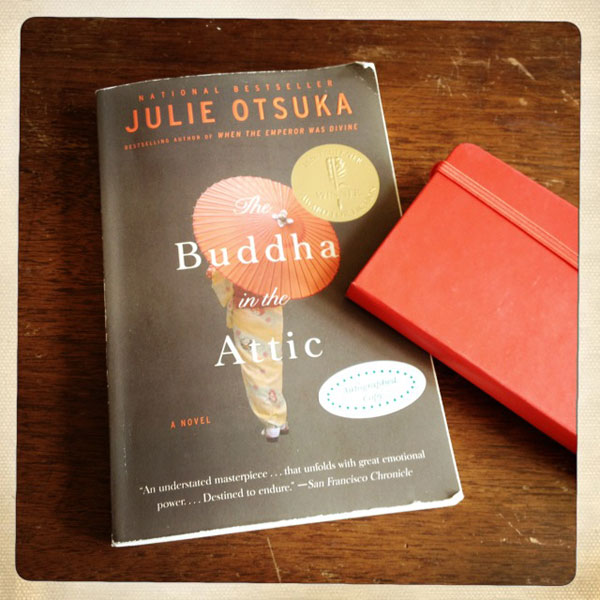
Buddha in the Attic by Julie Otsuka

I have low tolerance for people messing with conventional narrative modes, because it’s often done poorly. I like experimentation, but if you’re taking on William Faulkner and Virginia Woolf you’d better have some chops, Author Person. Don’t sneer about how most people don’t get what you’re trying to do. We get it. But almost no one is good at it, and I don’t want to be distracted by an author’s “groundbreaking choices” when I’m trying to suspend my disbelief.

Continue reading “Buddha in the Attic by Julie Otsuka”

Thank a Writer Project: News! Excerpts! Winner!

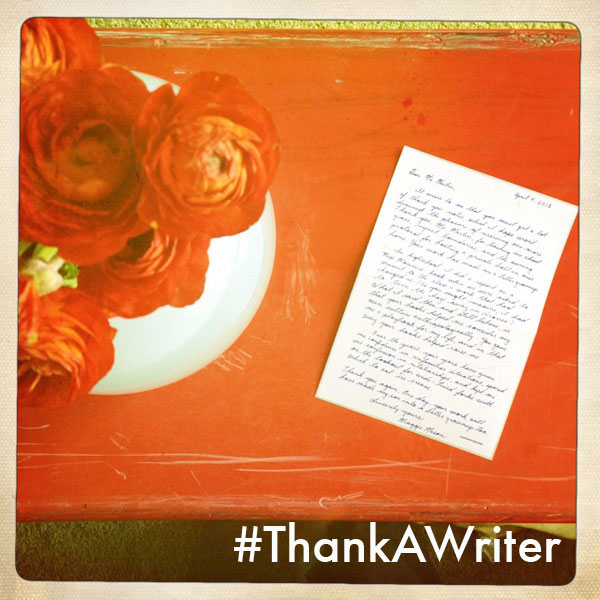
This month Nathan Bransford and I kicked off Go Mighty’s Thank a Writer Project by writing thank you notes to our favorite authors. You can join in at any time by adding “Thank my favorite authors” to your Go Mighty Life List, and tagging your letters with “thankawriter.”

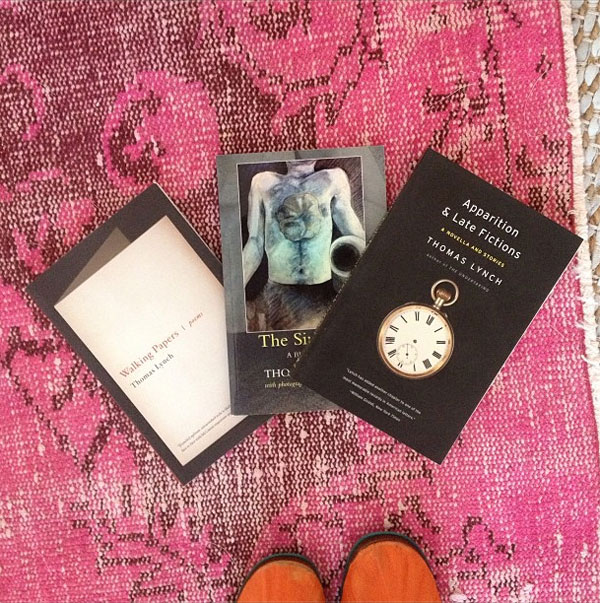
My first note of this project was to author Thomas Lynch. The other day, a package arrived in the mail, containing a few books. They were all by Lynch, and I didn’t remember ordering them. At first I was perplexed, and then as I read the byline on each book, my heartbeat quickened. I looked at the envelope’s return address. Above the address, the name “Lynch.”

Continue reading “Thank a Writer Project: News! Excerpts! Winner!”

Thank a Writer Project: Donald Hall and Jane Kenyon

Nathan Bransford and I are writing thank you notes to our favorite authors in the Go Mighty #ThankAWriter project. Please join us! See this post to find out how to create a Go Mighty profile and see the other inspiring letters. Every note you write and post about on Go Mighty enters you to win the first six books in the Penguin Drop Caps series.

This is our last week of the Thank a Writer project. We’ll be announcing the winner of the Penguin Classics drawing on Monday, so write some letters this weekend if you’d like to throw your hat in the ring.

My letter this week is a thank you and condolence letter to Donald Hall, husband of Jane Kenyon. Ms. Kenyon is my favorite poet, but she died in 1995.

Continue reading “Thank a Writer Project: Donald Hall and Jane Kenyon”

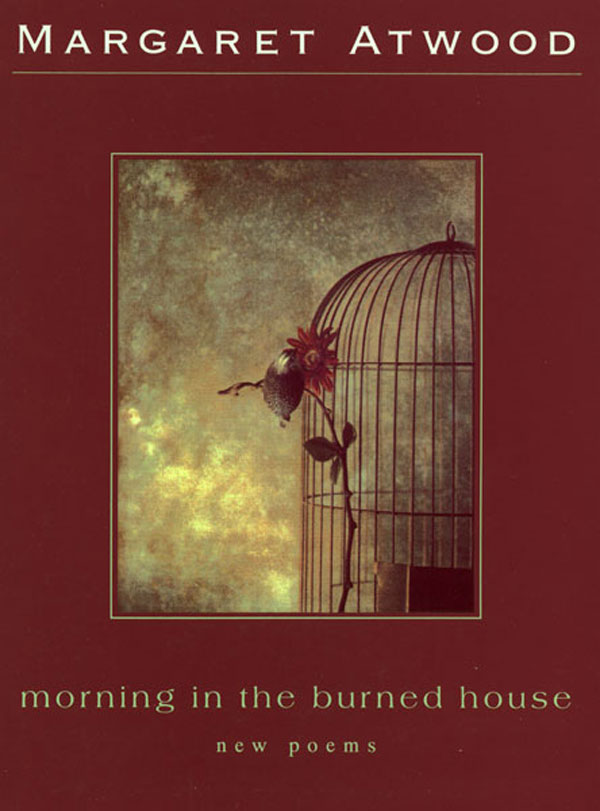
Morning in the Burned House by Margaret Atwood

Margaret Atwood is a favorite author, but this is my first read of her poetry. My favorite poem from Morning in the Burned House:

CRESSIDA TO TROILUS: A GIFT

You forced me to give you poisonous gifts.
I can put this no other way.
Everything I gave was to get rid of you
as one gives to a beggar: There. Go away.
The first time, the first sentence even
was in answer to your silent clamour
and not for love, and therefore not
a gift, but to get you out of my hair
or whatever part of me you had slid into
by stealth, by creeping up the stairs,

so that whenever I turned, watering
the narcissus, brushing my teeth,
there you were, just barely, in the corner
of my eye. Peripheral. A floater. No one
ever told you greed and hunger
are not the same.

How did all of this start?
With Pity, that flimsy angel,
with her wet pink eyes and slippery wings
of mucous membrane.
She causes so much trouble.

But nothing I ever gave was good for you;
it was like white bread to goldfish.
They cram and cram, and it kills them,
and they drift in the pool, belly-up,
making stunned faces
and playing on our guilt
as if their own toxic gluttony
was not their fault.

There you are still, outside the window,
still with your hands out, still
pallid and fishy-eyed, still acting
stupidly innocent and starved.

Well, take this then. Have some more body.
Drink and eat.
You’ll just make yourself sick. Sicker.
You won’t be cured.

More lines and stanzas of note:

left lipstick imprints the shape of grateful, rubbery
sighs on the cigarettes of men
I hardly knew and didn’t want to.

crisp as heated metal

The speech here is all warty gutterals,
obvious as a slab of ham

Wall me up alive
in my own body.

the lost syllable for “I” that did not mean separate

Wars happen because the ones who start them think they can win.

Vocabulary

capon – castrated roosterc
sauve qui peut – every man for himself
arpeggios – a musical technique where notes in a chord are played or sung in sequence, one after the other, rather than ringing out simultaneously.
abbatoir – slaughterhouse
carapace – a protective, decorative, or disguising shell
sic transit – thus passes
plangent – Loud, reverberating, and often melancholy
sibilants – Of, characterized by, or producing a hissing sound like that of (s) or (sh)
portage – carrying water craft or cargo over land, either around an obstacle in a river, or between two bodies of water

Thank a Writer Project: Where to Send an Author Thank You Letter

We’re in the third week of our Go Mighty Thank a Writer Project, and lots of you have asked where to send your notes when you don’t have an address. I asked Nathan, who knows this sort of thing. He says to look up the publisher’s address in the book and then send it to:

Author Name
c/o Publisher Name, Author Mail

So this note I’m sending this week is addressed like this:

Ms. Judith Martin
c/o Crown Publisher’s Inc., Author Mail
201 East 50th St.
New York, NY 10022

To read my note to Miss Manners and the rest of my notes, head over to my Life List on Go Mighty. And remember to tag your notes #ThankAWriter. Every tagged note is an entry to win the first six editions in the gorgeous Penguin Classics Drop Cap series:

Come here, you beautiful books, let’s cuddle.

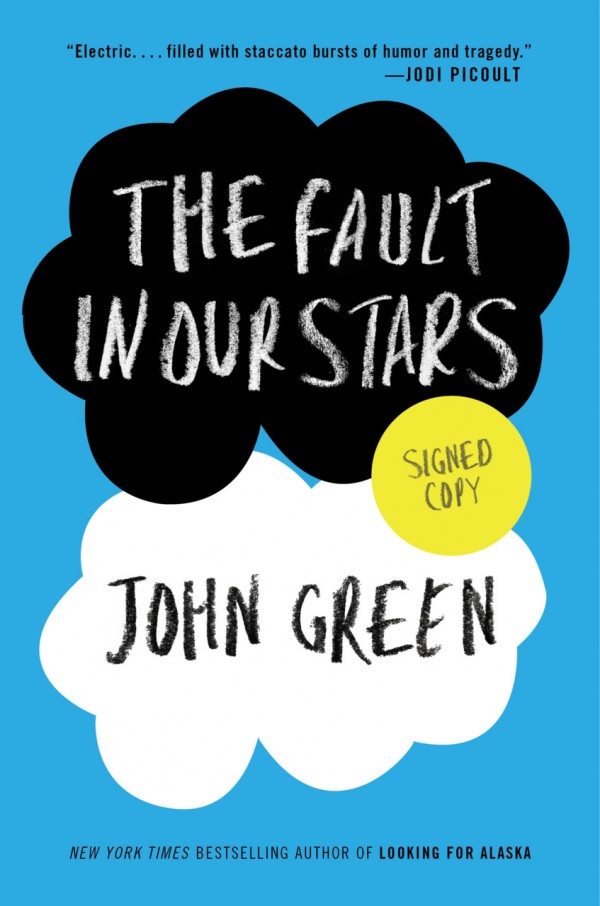
The Fault in Our Stars by John Green

This is the first thing I’ve read by John Green, and it’s good. Green is clever and talented — he certainly made me laugh. Still, I found this a frustrating read because it had the potential to be great. I still recommend it, but if you’re someone who notices when the shiny bits don’t match the rest of the work, this might bug you a little. That said, on to the shiny bits, of which there were plenty.

The best parts of The Fault in Our Stars:

I didn’t tell him that the diagnosis came three months after I got my first period. Like: Congratulations! You’re a woman. Now die.

“Yeah, hurdlers. I don’t know why. I started thinking about them running their hurdle races, and jumping over these totally arbitrary objects that had been set in their path. And I wondered if hurdlers ever thought, you know, This would go faster if we just got rid of the hurdles.

I liked being a person. I wanted to keep at it.

“Come over here so I can examine your face with my hands and see deeper into your soul than any sighted person ever could.”

The absolute sterility of the place made me nostalgic for the happy-kid bullshit at Children’s. Memorial was so functional. It was a storage facility. A prematorium.

Vocabulary

hamartia – fatal flaw
toroidal – doughnut shaped
numinous – filled with a sense of the presence of divinity

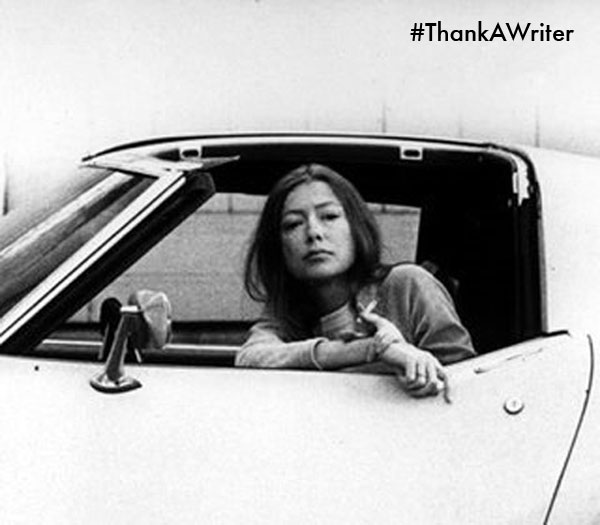
Thanks, Joan Didion. And Gorgeous Books for You to Eat.

Surprise. Writing to Joan Didion was daunting. These two paragraphs have twenty unnecessary words between them. Perhaps I should have just written “Thank you.” on a postcard. Ah well.

Since Nathan and I launched the #ThankAWriter project, Penguin Classics has offered to give the first six of their new Penguin Drop Caps series to one lucky bibliophile.

I want these. I can almost smell the paper. The drop caps were designed by Jessica Hische, who happens to be an acquaintance, so this makes me extra happy. Yay, Jessica! You do cool stuff.

If you like books and you’d like to enter, here’s all you have to do:

1) If you haven’t already, sign in on Go Mighty.

2) Create a life list goal of thanking authors. (Here’s mine.)

3) Every time you write a thank you note, post a photo or the text on Go Mighty with the tag #ThankAWriter.

We’ll enter your name once for every note you write. This is our second week of a five-week project, so dig out your stationery and get to it. It will make you happy.