Seating Arrangements by Maggie Shipstead

Hey look, it’s a contemporary author who has me waiting for her next novel. That doesn’t happen often.

I recently read Maggie’s Astonish Me, and while we wait for her next book, I thought I’d post my favorite parts of her first book, Seating Arrangements:

How had she, Biddy, managed to raise someone so exposed and defenseless, a charred moth, a turtle without a shell, exactly the kind of woman she most feared to be?

“Hey, I’m not a member of this Great Gastby reenactment society you all have going on. I just think it’s possible to trick yourself into feeling better by pretending you feel better.”

While Winn believed that worthwhile young men must be carefree, he also believed that worthwhile grown men must bear up under the burden of respectability. He puzzled over when exactly the music should be stopped and the drunks sent home and the crepe paper swept from the floors to make room for cribs and Labradors. Is it now? he wondered as he set down his drink and turned from a conversation with a beautiful girl to vomit into the swimming pool of his friend Tyson Baker. When he heard some months later that Tyson Baker had died during a game of pond hockey, dropping through the ice like a lead weight, he thought, Is it now?

Underneath her wedding dress Biddy wore a white garter belt and stockings that he found unbearably sexy but did not tell her so, not wanting to embarrass her by making a fuss and also incorrectly assuming she had a whole trousseau of lingerie that she would, without prompting, trot out over their first year. Silence over stockings — the first regret of his marriage.

She was so entirely the kind of person he should be married to that he loved her, in part, out of gratitude for her very appropriateness.

Spending so much time with the Van Meters was like returning to a cherished childhood home and discovering that either her memory had been wrong or time had taken its toll, and the place was not magical or special at all but ordinary, flawed — a revelation doubly offensive because it made a certain swath of past happiness seem cheap, the product of ignorance.

Dominique peeled the label from her beer while Dicky Jr. talked, her head angled toward him to suggest she was listening.

Vocabulary:

Aubusson rug – floor covering, usually of considerable size, handwoven at the villages of Aubusson and Felletin, in the département of Creuse in central France. Workshops were established in 1743 to manufacture pile carpets primarily for the nobility, to whom the Savonnerie court production was not available. Aubusson carpets were, however, also made for the royal residences.

gliss – In music, a glissando is a glide from one pitch to another. It is an Italianized musical term derived from the French glisser, to glide. In some contexts it is distinguished from the continuous portamento. Some colloquial equivalents are slide, sweep, bend, or ‘smear’.

Operating Instructions by Anne Lamott

The best parts of Operating Instructions: A Journal of My Son’s First Year by Anne Lamott:

Little by little I think I’m letting go of believing that I’m in charge, that I’m God’s assistant football coach. It’s so incredibly hard to let go of one’s passion for control. It seems like if you stop managing and controlling, everything will spin off into total pandemonium and it will be all your fault.

…there is always something to fix or do. It is so fucking excruciating just to be. Just to be still.

I have listened so attentively to the most boring, narcissistic men so that they would like me or need me. I’d sit there with my head cocked sweetly like the puppy on the RCA logo… It was like those men held me hostage. I’d think about chewing my arm off to get out of the trap so I could rush home and hang myself, but at the same time I’d need them to think well of me.

Orville, who raised an infant son fifteen years ago, says he remembers clearly how insane things get with an infant around. He said even with a mate, it’s like having a clock radio in your room that goes off erratically every few hours, always tuned to heavy metal.

On her infant son:

He’s so pretty that it’s sort of nuts. I’m sure he will be as gay as an Easter bonnet. My friend Larry gave him a naked Ken doll that Sam took a shine to one evening when my reading group met at Larry’s, and it’s totally Fire Island around here now. Sam licks and chews the naked Ken doll at every opportunity. I called Larry and said, “You’re trying to recruit my son,” and he said, “Look at it this way — in twenty years you won’t be losing a son, you’ll be gaining a son.”

No one ever tells you about the tedium. (A friend of mine says it’s because of the age difference.)

He has this beautiful hand gesture where, when he’s nursing, he reaches back with his free hand to touch and lightly pat the crown of his head, and it looks exactly like he’s checking to see if his bald spot is exposed.

Valerie Jarrett

From Esquire’s interview of Valerie Jarrett, Senior White House Advisor:

• If somebody’s trying to get you angry, the calmer you get, the angrier they’ll get.
• Just because you’re nervous doesn’t mean you have to look nervous. Nobody can look inside you. Project what you want to project.
• You can’t expect people to put your friendship on hold because you’re in a demanding job. Friends require investment. Like a garden, you have to water them. If you don’t, they dry up.
• You have to look at people in order to be able to read them.
• Anytime I was hesitant about taking a chance, my grandmother would say, “Valerie, put yourself in the path of lightning.

Astonish Me by Maggie Shipstead

Maggie Shipstead is a friend, she came to one of our Mighty Summits. I know someone at the Iowa Writers’ Workshop probably already told you this Maggie, but hell you can write.

A few of my favorite parts of Astonish Me:

He kissed her once, just before he left for college. it had been the kind of kiss that asks for something enormous.

For the first time she can remember, she is not afraid of failing, and the relief feels like joy.

One of Jacob’s greatest fears was that his life will not appear intentional.

She fears the slow, corrosive trickle of reality into his adulation.

She feels his love grow less dense around her, like a fog lifting.

She prefers Elaine to remain fixed in her old life like an obsolete weather instrument gathering data no one ever sees.

He felt like a sparkling silver parachute had opened around him, delicate as the billow of a jellyfish.

“I hate the city in the summer,” she said. “It’s like living inside a dog’s mouth.”

Rookie Yearbook 3

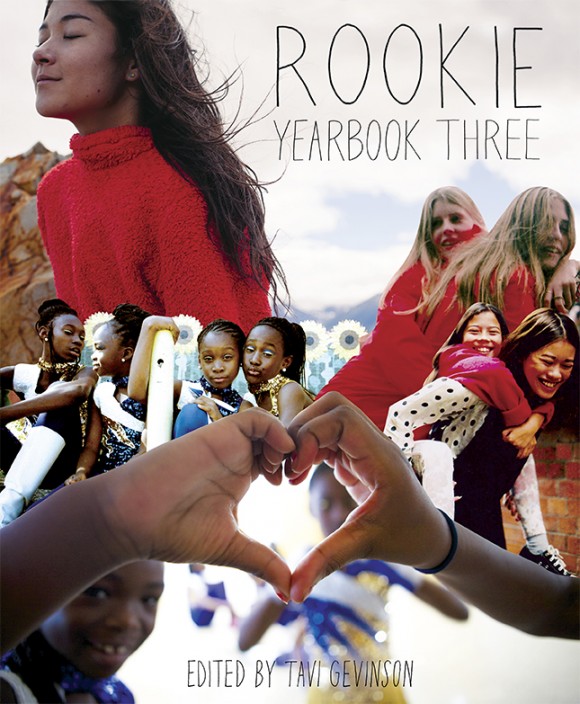
“I just feel like, overwhelmed by not knowing who I am now or what my Identity is or what my Core Me–tools are to come back to when I feel sad. Going back to what used to be myself just pulls me into a lot of painfully bittersweet memories, so I’ve been talking less and drifting more and actively testing a theory that reincarnation can happen to live bodies by trying to turn myself into a blank slate. It leaves me both terrified that I could become an actual monster, as well as thrilled that I could become the exact person I ought to be, WE CAN BE HEROES Bowie-style.” –Tavi Gevinson from her July 2014 Rookie Mag editor’s letter.

The New Rookie Yearbook is available for pre-order.

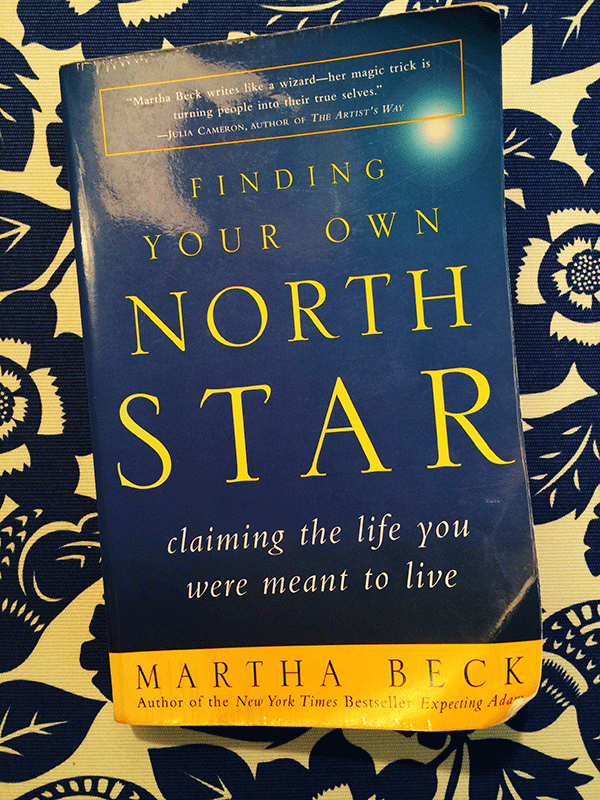
Finding Your Own North Star by Martha Beck

Read this book. I’ve mentioned Martha Beck several times over the years, she’s a career development specialist and a columnist in O Magazine. I’ve reread this book twice over the last few years, and it introduced me to a couple of concepts that come up a lot when I’m considering what I want to do next.

First, the Generalized Other, which is the people we’re actually referring to when we say “Everyone will think I’m dumb.” Ms. Beck posits that we often pull a handful of terrible people together to make up our “Everybodies,” because of the natural instinct to avoid danger and preserve social access. She has a whole chapter on how to replace your Generalized Other with people who support you. Useful.

Second, the idea that we’re perpetually cycling through four general life phases: 1. Death and Rebirth, where we lose our identity to a catalytic event like a death or, on the converse, winning the lottery. 2. Dreaming and Scheming, where we try on new plans for ourselves. 3. The Promised Land, where we work hard toward our goals. 3. The Hero’s Saga, where we achieve our aims and work on a daily basis to maintain our life until another catalytic event knocks us back to a new identity shift. She offers strategies for tackling each phase, because her theory is that all of us have trouble getting through at least one of the phases.

More best parts of Finding Your Own North Star, by Martha Beck:

“Keeping your body still when it wants to recoil or rejoice creates the physical tension that locks sensation away from consciousness.”

“Even if you achieve things that seem outwardly fabulous, an unhealed emotional injury will make you experience them as empty and unappealing.”

“If you begin to face your fears, something bittersweet is going to happen to you: You’ll grow up. You’ll lose your dependency on the grownups of the world, because you’ll realize that there is no time, no age, at which fear suddenly fades and you become one of these impervious beings.”

“Describing what you want is probably the most important step in any confrontation.”

“I don’t believe in suffering for its own sake. Enduring a thankless, painful life doesn’t mean that you deserve happiness as a kind of recompense; it just means you’re enduring a thankless, painful life. If I’m going to suffer, it better be for a damn good reason. It better yield me more joy than it costs. If not, I will do anything I can to avoid it, and advise all my clients to do the same.”

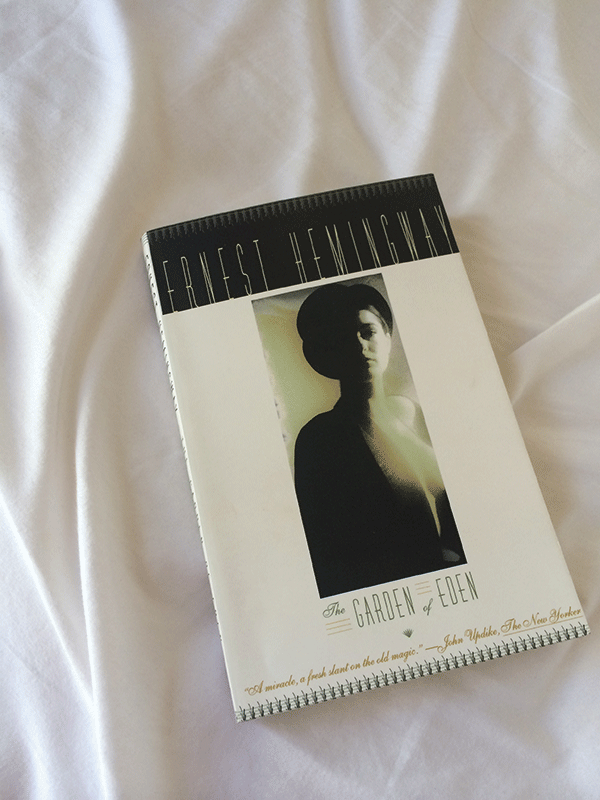
The Garden of Eden by Ernest Hemingway

The best parts of The Garden of Eden by Ernest Hemingway:

She took her coffee without sugar, and the young man was learning to remember that.

“The whole way here I saw wonderful things to paint and I can’t paint at all and never could. But I know wonderful things to write and I can’t even write a letter that isn’t stupid. I never wanted to be a painter nor a writer until I came to this country. Now it’s just like being hungry all the time and there’s nothing you can ever do about it.”

This was the first writing he had finished since they were married. Finishing is what you have to do, he thought. If you don’t finish, nothing is worth a damn.

She drank the glass off and then held it, looking at it, and David was sure that she was going to throw it in his face. Then she put it down and picked the garlic olive out of it and ate it very carefully and handed David the pit.
“Semi-precious stone,” she said. “Put it in your pocket. I’ll have another one if you’ll make it.”

His father was not vulnerable he knew and, unlike most people he had known, only death could kill him. Finally, he knew what his father had thought and knowing it, he did not put it in the story. He only wrote what his father did and how he felt…

His father, who ran his life more disastrously than any man that he had ever known, gave marvelous advice.

He had lost the capacity of personal suffering, or he thought he had, and only could be hurt truly by what happened to others.

So you must write each day better than you possibly can and use the sorrow that you have now to make you know how the early sorrow came.

“I do like to look at you though and I’d like to hear you talk if you’d ever open your mouths.”
“How do you do,” said David.
“That was quite a good effort,” Catherine said. “I’m very well.”
“Have any new plans?” David asked. He felt as though he were hailing a ship.

“Can’t I read it so I can feel like you do and not just happy because you’re happy like I was your dog?”

There had been too much emotion, too much damage, too much of everything and his changing of allegiance, no matter how sound it had seemed, no matter how it simplified things for him, was a grave and violent thing and this letter compounded the gravity and violence.

They were inside at the bar and the day had come in with them. It was as good as the day before and perhaps better since summer should have been gone and each warm day was an extra thing. We should not waste it, David thought. We should try to make it good and save it if we can.

VOCABULARY

Vadepeñas – a Spanish Denominación de Origen (DO) for wines located in the province of Ciudad Real in the south of Spain

“the get” – an animal’s offspring

kraal – an enclosure for animals

Ngoma – a type of drum used by Bantu-speaking people of East Africa

The Best Parts of Strengths Finder 2.0 by Tom Rath

I found Strengths Finder and its online component very useful. The book introduction outlines an overall philosophy on effort, and then has a chapter covering thirty-four strengths they’ve identified through research. Each chapter gives an overview of the strengths and then offers ideas for action.

You can read the whole book, like I did, or take an online quiz to show which strengths are yours so you can focus on those.

Overarching points:

“…people have several times more potential for growth when they invest energy in developing their strengths instead of correcting their deficiencies.”

“The key to human development is building on who you already are.”

“Most successful people start with a dominant talent — and then add skills, knowledge, and practice to the mix. When they do this, the raw talent actually serves as a multiplier.”

Sample text from a strengths chapter:

INPUT

Sample information: “If you like to travel, it is because each new location offers novel artifacts and facts. These can be acquired and then stored away… who knows when they might become useful?”

Sample action item: “As you gather and absorb information, be aware of the individuals and groups that can most benefit from your knowledge, and be intentional about sharing with them.”

I found the book valuable mostly because some of the best decisions I’ve made have come from following what felt like the path of least resistance. But that can also feel like a cop out, because I have a lot of internal voices saying, “Overcome your weaknesses! Be a better you!” And so forth. The truth is, the you you’ve got is just fine. Work with those raw materials instead of fighting your nature, and you make more progress.

I have a friend who makes hiring decisions based on the philosophies in this book. I’m curious about whether any of you have done it, and whether you found it useful.

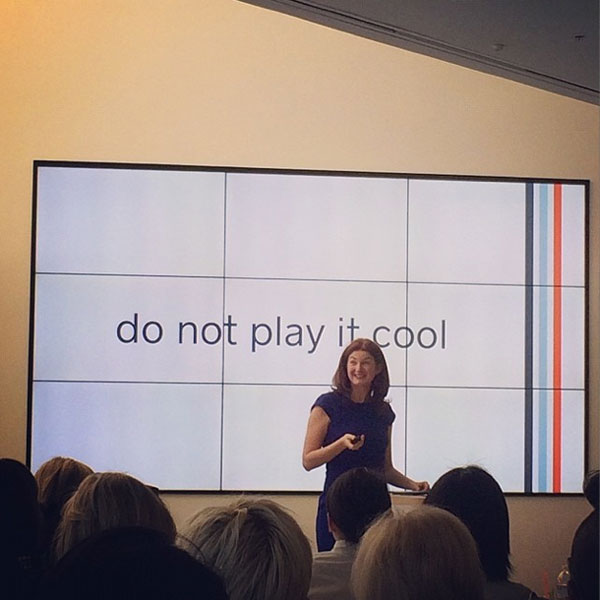
You Do You, Resources List for My Talk at Square

Last week, I was heads down preparing the talk I gave at Square Monday. If you were there, hello! This is a resources list, and I’ll be posting here in the coming days to review some of the concepts we covered.

Photo by Etta and Billie, who makes small batch sustainable bath and body products.

WEB
SxSW Oral History by Fast Company
My Life List on Go Mighty
Rise of the new geeks: How the outsiders won in the Guardian
New Sincerity
Punk Rock is Bullshit by John Roderick
The Empathy Vacuum by Greg Knauss
Tavi Gevinson’s Rookie Mag
Zooey Deschanel’s Hello Giggles
Elizabeth Gilbert’s advice on keeping expenses low

READING
Finding Your Own North Star by Martha Beck
Daring Greatly by Brene Brown
The Four Agreements by Don Miguel Ruiz
Phillipa Rice’s Soppy Comic Book series

TEAM MIGHTY
Go Mighty is our community site.
Camp Mighty is our annual conference. Please let us know if you’d like a note when we open registration.

And if you’re looking for me elsewhere, I’m on Twitter @maggie, Instagram at Maggie Mason, Facebook, and Pinterest. If you’d like to have me come speak, send a note to camille at gomighty.com.

I love speaking, so thanks for coming to listen.

Esquire’s What I’ve Learned


Photo from Firstlook.org

I’ve always looked forward to Esquire’s What I’ve Learned interviews. Once a year, they come out with an issue that has several of them. The best parts from this year’s:

Keith Olbermann

“Your anger will cool into hardened passionate insight if you wait a day. Most of the things that make me angry, I try to let them sit. The heat that remains will be sufficient. The stuff that evaporates is the stuff that would have simply offended or made it histrionic.”

“Don’t assume that anybody above you actually knows what they’re doing. And if you find somebody who does, stick to them like glue. Because the further you go into our career, the more you will discover to your absolute horror that you are the adult.”

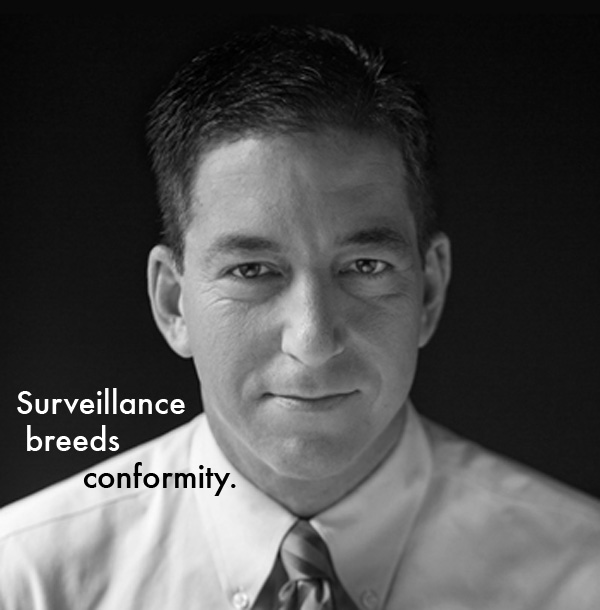
Glenn Greenwald

“Ultimately the reason privacy is so vital is it’s the realm in which we can do all the things that are valuable as human beings. It’s the place that uniquely enables us to explore limits, to test boundaries, to engage in novel and creative ways of thinking and being. Only if we feel free of the kind of judgmental eyes of others are we able to try different things out, to experiment, to evolve, to free ourselves of mores that are imposed on us or conventional orthodoxies about how we’re supposed to behave and think. And that, ultimately, is what is most valuable about being human: to be able to create new ways of thinking and being.”

“Surveillance breeds conformity.”

“There are different ways that kids who are gay take on the rejection and alienation they feel. The way I dealt with it was to say, You know what? You’re imposing judgments on me and condemnations, but I don’t accept them. I’m going to instead turn the light on you and see what your flaws are and impose the same judgmental standards on you.”

“If you’re gonna challenge people in power, you have to be ready to be attacked in effective ways. That’s the nature of power…”

Tina Louise

“You’ve got to get yourself in the proper state of mind to be useful to the universe.”

If you liked this post, I did another What I’ve Learned recap in 2010.