
I’ve had New York on my mind for months. They have summer here, and hot dog stands, and the Empire State building right outside the window.
Are you in town this week? Remember to meet us for drinks Saturday at the Volstead.
Famous among dozens
I’ve had New York on my mind for months. They have summer here, and hot dog stands, and the Empire State building right outside the window.
Are you in town this week? Remember to meet us for drinks Saturday at the Volstead.
Hey, remember about two weeks ago, when I swore off waxing in this video? I believe my exact words were, “I have never, ever waxed. I don’t have any intention of waxing. It sounds so hyper incredibly painful.”
Well, I now have firsthand knowledge that I was correct. A few days after taping that video, Natalie (may she burn in hell) convinced me that I should try a bikini wax for my trip to Jamaica. We were getting our nails done at a place that offered hair-ripping services, so I figured what the hell?
More like what the helllllllll? It wasn’t so much the the waxing itself — which was deeply undignified but not too painful — it was the horrifying, burning, swollen aftermath. It never occurred to me that I would need to heal after waxing. Perhaps because I am stupid.
In the airport I texted Heather about how angry I was. Why hadn’t anyone told me?
-I got a bikini wax. Huge mistake. Epic.
-Was this your first?
-Yes. I’m lucky I didn’t scar.
-Oh no!!! … But you’re smooth right?
-Screw you. I’m smooth like a plucked chicken with some sort of inflammatory disease.
Armstrong, you are among the women I blame for not disclosing. You couldn’t help a sister out by casually mentioning the bathroom issue?
Ladies, listen to me. There is no controlling the post-wax spray. You are no longer in the director’s chair when it comes to peeing, you are a helpless urinary bystander. Your stream becomes aimless and befuddled, like a Valium-addled housewife. Now you know.
Yes, it is convenient not to worry about shaving. But does that negate the indignity of traveling commando because wearing underwear is too painful? Does it overshadow the concern about what sort of wonderous airplane fungus is working its way through your skirt and into your “system?”
No, ladies. No it does not.
In an effort to gather all my writing in one place, every Monday I post articles that originally appeared elsewhere, or work that has been gathering dust on my hard drive. This piece was originally titled “The Non-Expert: Threesomes” and was published in 2003 over at The Morning News. The Non-Expert series answers questions posed by Morning News readers. Thanks to Rosecrans Baldwin, who edited this piece.
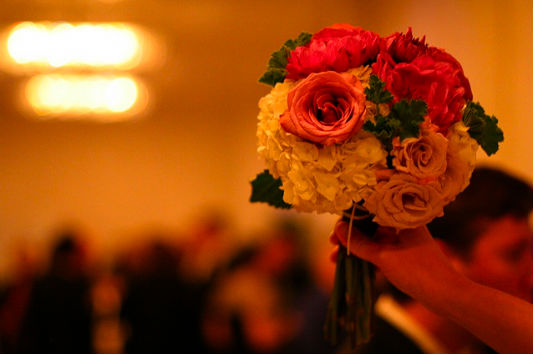
I’m about to outline some of the more common wedding etiquette missteps. Before I do I should tell you that by the time you read this, I will have been to five weddings this season.
Please note that none of my dear friends have committed any of the social blunders I’m about to mention. If they did do anything wrong, I was far too overcome with joy to notice. However, I’m quite sure they didn’t, because they’re perfect.
Now for the rest of you.
Engagement
I’m not sure how things got turned around, but the correct way to ask for someone’s hand in marriage is to first ask your beloved, and then to ask for a parental blessing. Asking her parents beforehand makes it much more embarrassing if she turns you down, it’s also an uncomfortable way to find out that they never really liked you.
If luck is on your side, the champagne will flow freely during your engagement. When friends raise their glasses you and your affianced should smile brightly and keep your hands folded in your laps. Drinking to oneself is immodest; no matter how much you like champagne.
If you decide he’s not for you, decency demands that you return the engagement ring. If you find out he’s been having an affair with his secretary, self-respect demands that you return the engagement ring, albeit in a more spirited manner. If your wedding is canceled, return any gifts as well.
When choosing attendants, remember that they don’t need to line up symmetrically. If one of you has more friends, so be it. Better to upset the photographer than your old dorm mate.
Invitations
Most couples decide they want a sumptuous sit-down dinner and then cut their guest list until it bleeds. These people are going about things backward. Your guest list should determine the scale of your event instead of the other way around. Trim the decorating budget and the seven-course menu. An abundance of friends is much more charming than an abundance of flowers.
Once you have a basic list, there are a few things to keep in mind. First, you must invite both halves of a socially recognized couple. Those who are married, engaged, or living together count as social units. You may not have the company of one without the other, even if this particular other is a jerk. Second, you get to decide whether you want to invite children. Guests who express annoyance that their children aren’t included are the same ones who will let them scream through the ceremony.
There’s a lot of room for error with invitations. It’s helpful to think of them as petite social landmines with quaint wax seals. Send them four to six weeks out.
A few things you shouldn’t include in the envelopes:
The tissues that come with engraved invitations. They’re meant to protect the ink from smudging before the invitations are delivered to you. Including them in the envelope is rather like wearing a plastic poncho over your dress so as not to ruin it for a really special occasion.
Registry cards. Gifts should always seem to come as a pleasant surprise. This is what is known as a ‘polite fiction,’ emphasis on polite. You can tell people where you’ve registered, but only if they’ve asked, and only if you can manage to dim that spark in your eye.
RSVP cards. These imply that your guests wouldn’t otherwise take the time to respond. Unfortunately, the same cretins who don’t respond to wedding invitations won’t bother to mail back your RSVP cards. Etiquette permits you to beat these people senseless.
There are a few guidelines for invitees as well. You don’t get to bring a guest unless you’re specifically invited to do so. You also don’t get to complain about not being invited to do so. It’s time you learned to mingle and socialize like a big kid. If your spouse or significant other can’t make it, you may not bring a friend in his or her place (much as you may not exchange the invitations for the price of your dinner and do something more fun with the money).
Attire
I know you think black bridesmaid dresses look sharp, and you’re having an evening wedding anyway, and you’re trying to choose a dress they’ll wear again. The answer is still no. In American culture, black is associated with mourning and loss, two emotions you’re not trying to inspire in anyone except his ex-girlfriend.
Though attendants on either side can be any sex, they should still dress to suit their gender. This means if your bridesmaids are wearing blue dresses the groom’s female attendants should wear blue dresses as well. Making the groom’s female attendants dress in novelty tuxedos is awful unless you have a tap routine planned for the recessional.
Either the event is formal, or it’s not. The bridal party’s attire should reflect the same level of formality as that of the guests. It makes no sense to have the guests in suits and the groom in a tuxedo. It makes even less sense to have the groomsmen in black tie and the groom in white tie.
Female guests shouldn’t wear white, lest they look as though they’re competing with the bride. Neither should they wear black, unless they’re mourning for her.
Ceremony
As mentioned earlier, it is untrue that all of the bridal attendants must be women and that everyone on the groom’s side must be a man. If the groom has a sister, she should stand on his side. If the bride has known Tommy since she was three, why would he stand next to the groom?
The custom of giving away the bride should be altered to suit your particular situation. If your mother raised you, she should do the honors. If a grandparent raised you, it would be sweet to ask him or her to accompany you.
Have a receiving line after the ceremony. It’s the only way to guarantee that every guest is introduced to all of your family and attendants, and the only way to ensure that you’ll have a chance to speak with sweet Aunt Thelma who traveled all the way from Florida. It’s also the best way to catch sneaky guests who skip the ceremony and show up for the food.
Your guests’ comfort takes precedence over your scrapbook. Don’t delay your arrival at the reception by scheduling a photo session just after the ceremony. If you must have a few post-ceremony photos, keep the shoot duration to less than 20 minutes.
Reception
Look at how embarrassed the bride is! How hilarious to see the groom’s head up her skirt, removing the garter with his teeth. Isn’t it sweet how she blushes at this reenactment of marital consummation? No, it’s vulgar. Cut it out. If you’re going to toss a garter, at least remove it in private.
Technically—technically—you’re supposed to leave your wedding before your guests do. The bride should change into a smart little traveling suit so everyone can pelt the happy couple with rice and then go home to get some sleep. This never happens. Instead, older guests hang on as long as they can, halfheartedly toss a palm full of rice at the couple, who are busy shimmying on the dance floor, and retreat to the quiet of their hotel rooms.
If you can’t afford alcohol, don’t make your guests pay for it. Provide what refreshment you can afford, and forget the cash bar. And, you, guests: The hosts are in charge of the leftovers. If you decide that it’s a shame to let so much food go to waste, you may be informed coldly (as you’re filling makeshift doggie bags) that the bride and groom have arranged for the extra food to be donated to a homeless shelter.
Gifts
Guests who receive invitations to weddings that they won’t be able to attend are not obligated to send a gift, but they should send a congratulatory note. The same is true of wedding announcements.
Gifts are properly sent to the couple’s home before the wedding or up to one year afterward. This way, the newlyweds needn’t worry about renting a truck to cart the gifts home, and you have a year to make sure that the marriage will take. This is a handy thing to know.
The horrible idea that the price of one’s wedding gift should roughly equate to what the bride and groom spent on your dinner is untrue, but it continues to be propagated by people who spend too much on their weddings. On the other hand, a guest’s transportation to the wedding doesn’t count as a gift to the couple. So cough up that toaster, buddy.
Also false is the notion that guests must choose a gift from the couple’s registry. While registries are helpful for those who don’t know the couple’s tastes, it is a compliment if a guest takes the time to pick something more personal—even if that something is yet another crystal flower vase.
Registries are the limit of how much a couple may direct gift giving. You may not indicate that you would prefer cash, request donations to your mortgage fund, take up a honeymoon collection, or even mention that you’d rather the money go to charity. Any attempt to direct generosity looks greedy. Coincidentally, it also makes guests feel less generous.
After the bride and groom have opened a gift, they have about three minutes to write a thank-you note. That includes the time it takes to cackle over the crocheted toilet-paper cozy with Barbie Doll topper. There’s no etiquette rule specifying that the bride must write all of the thank-you notes. Gentlemen, take up your pens.
While we’re on the subject, a few things that don’t count as proper gratitude: verbal thanks, postcards from the honeymoon, and those terrible preprinted cards that quack, ‘Your generosity is appreciated.’
Happily Ever After
It doesn’t matter who is paying the bills—weddings are family affairs. So if you want a nudist ceremony, you might want to run that by your parents first so they can opt out. And if Uncle Murf dies on the day of the wedding, you can go ahead with your solemn ceremony, but you should cancel the reception out of respect.
Like any good party or celebration, the objective of your wedding reception is to cater to guests’ needs and make sure that everyone is having a good time. Couples who run around screeching, ‘It’s our special day!’ ultimately deserve one another.



I have something nice to tell you.
Remember a few months ago when I mentioned selling the shopping sites? Well, today I’m thrilled to announce that we’ve found them a very good home with Staircase Ventures — a small company run by fellow online shoppers.
I wanted to do right by those of you who have read and supported Mighty Goods, Haus and Junior through the years, so I’ve been working with the crew from Staircase Ventures to transition everything. They’ve been posting on Mighty Goods for the past couple weeks, so go have a look at their handiwork.
The current plan is to keep the sites humming along with a small team of writers who have the time and resources to make everything better. Selling Mighty Goods and the sister sites was such a difficult decision, but I want space for all of us to work on our life lists as a community, and now I have time to figure out how. As of today, I’m officially a person who has sold a business, and though that’s not on my life list, it’s a big effing deal, my friends.
Thanks to all of you who contacted me about buying Mighty Goods, or just to tell me how much you’ve loved shopping with me over the years. You guys are awesome.
In an effort to gather all my writing in one place, every Monday I post articles that originally appeared elsewhere, or work that has been gathering dust on my hard drive. This piece was originally titled “The Non-Expert: Threesomes” and was published in 2003 over at The Morning News. The Non-Expert series answers questions posed by Morning News readers. Thanks to Rosecrans Baldwin, who edited this piece.

I know I’m going to get a lot of grumbles on this one, especially because it’s written in such an unfamiliar tone. Please remember that the idea behind these etiquette articles isn’t that you should be perfecty-perfect all the time, which would make you insufferable, only that you should know the guidelines. That way you have the pleasure of feeling wicked and bohemian when you flout them.
My late grandmother had fantastically eccentric decorating taste. In the living room immense zebra-striped curtains stretched to the ceiling, the red shag carpet came to your knees. I spent many spin-sick childhood hours on the swivel stools of her tiki bar, replete with coconut monkey and glass hula-girl swizzle sticks.
She also kept a noticeably unattractive gilded bust of Nefertiti on her living room table. When I asked her where it came from she replied, ‘Well, Margaret, an older gentleman friend of mine has arthritis. That bust is covered in 14-karat gold. His hands were too bad for him to paint the gold on, so he held the paintbrush in his mouth.’
‘Wow,’ I replied. I was seven.
‘Yep,’ she said. ‘That thing is goddamn terrible. But I tell you what, when a man paints something for you with his teeth, you put it on the living-room table.’
Grandma also taught me more general etiquette guidelines. For example, one does not wear white shoes before Memorial Day or after Labor Day. This rule remains steadfast unless you happen to be a bride, a tennis player, or a pimp. In the latter case, you have more pressing etiquette issues than your choice of wingtips.
You may know etiquette basics, but knowing the niceties is twice as much fun. This is because there are a few things that nearly everyone does incorrectly without realizing it. Therefore, you can scandalize your friends in expensive restaurants by removing fish bones from your mouth with your hands and blithely grasping asparagus with your fingers.
What’s more, you can learn to avoid inadvertently offending those you hope to impress, and impress people who know how the playbook reads. One person’s ‘No big deal’ is another’s ‘Well, I never.’ Nowhere is this more apparent than at social gatherings. Let’s review what grandma expects of you.
Don’t throw parties in your own honor.
Throwing a birthday party, a shower, or an anniversary party for yourself lacks humility. It also suggests that the party is a poorly camouflaged push for gifts, instead of a heartfelt expression of affection from a dear friend. The guest of honor and the host must be two different people so that one can say, ‘Oh no, you don’t need to get me anything. The pleasure of your company is all I need,’ while the other whispers, ‘She’s very fond of Tiffany’s.’
Never issue invitations too far in advance.
Overzealous hosts who send invitations several weeks in advance are setting social traps. How can the polite, but unwilling, friend possibly find a reasonable excuse? ‘I’m having surgery that day’ only works once, and it’s rather unpleasant to arrange for the scarring as evidence. Polite hosts send invitations no more than a week and a half beforehand unless the event will require travel arrangements (as in the case of a wedding).
Respond to invitations promptly.
When someone invites you out you have approximately two days to respond. If you’re not going to attend for goodness sake say something. Are you coyly holding out for a better offer, you clever thing? Do you suppose you’re being discreet by simply showing up at the event when nothing more interesting comes along? I assure you, the host—who is now scrambling to provide food and drink for you and five others of your ilk—knows exactly what you were up to and is already plotting revenge. Do you really want this person mixing your drink?
Remember that invitations are non-negotiable.
Accepting only a portion of an invitation is rude. ‘Oh, I would so love to hear little Timmy perform on his new banjo, but that evening is awfully busy. Would it be possible for us to just drop in for coffee afterward?’ No, it wouldn’t.
If you’ve said you will attend, please do.
Once you’ve said you’re coming there are a few acceptable excuses for not showing. These include sudden coma, the death of a loved one, or having left the country unexpectedly under government protection. Unacceptable excuses include heavy workload, exhaustion, a better offer, or the ever-thoughtful ‘just feel like staying in.’ This implies that a nap or the Sunday-night showing of National Lampoon’s European Vacation is more interesting to you than whatever your host had planned.
Handle introductions gracefully.
Introductions should include first and last names. This way guests can locate one another if they’d like to pursue a ‘closer friendship.’ More importantly, they needn’t call each other by first names until asked to do so. By American custom acquaintances greet one another and take leave with handshakes. If you insist upon hugging non-intimates you can be reasonably certain that people are making funny faces over your shoulder when swallowed in an unwelcome embrace.
Don’t offer or request a house tour.
Tours of your home should only be given upon request, lest you look as though you’re showing off your bowling trophies. Genuinely interested guests should request tours vaguely, ‘I’d love to see the what you’ve done with the house sometime.’ This way your hosts can politely deflect the inquiry if they’ve stuffed their dirty laundry in the study.
Know the difference between business and pleasure.
One does not properly hand out business cards at a social event, even if another guest makes a business-related request. Doing so implies that you’re using friends’ homes for mercenary purposes. Perhaps you can find a small piece of paper and a pen instead. If you’d like to be perfectly correct, you can have slightly larger social cards printed with only your name and contact information. And please stop chuckling: a girl can dream.
Don’t groom or perform otherwise personal acts in public.
No absent-minded cleaning beneath the fingernails, no after-dinner tooth sucking or picking, no stocking straightening, no undergarment adjustment, no hair patting, no lipstick application, and no overtly moist displays of affection.
Repackage prepackaged food.
Under no circumstances does the well-set table include prepackaged food items. Ketchup, mustard, jam, and so on are housed in jolly, lidded pots with wee-little spoons. Milk goes in a pitcher. The only exception to this rule is the wine, which you can put in a decanter if you’ve one laying around (perhaps next to the silver grapefruit spoons), but otherwise is fine in its own bottle.
Keep conversation comfortable.
I shouldn’t even have to say this, but certain segments of the population need a reminder that religion, politics, and anecdotes involving excessive bleeding are not proper dinner conversation.
Send a thank-you.
A host gift isn’t required for dinner parties (though gifts are almost never rude), but you do need to write a proper thank-you note.
So, what is a proper thank-you note? Let’s start with your little box of ‘Thank You’ note cards tucked in your desk drawer. The kind with preprinted gratitude stamped on the front? First, I’d like to congratulate you for being amongst the few who still realize that thoughtful gestures are correctly recognized with a note. Now, throw those cards away. Please.
Thank-you notes should indeed be notes. They’re written on white or cream stationery with a plain—but colorful—border. Blue is a classic choice. (And while you’re dispensing with the thank-you cards, you might want to discard the sympathy cards, which are even more impersonal. Purchase some white or cream paper with a black border, and use that instead.)
Reciprocate.
After you’ve expressed your gratitude remember that it’s your turn next time. You may entertain in whatever manner you can afford; a Sunday breakfast is an acceptable return for a formal dinner. Many people will tell you not to worry about social debts. You’ll note that these are the same people who don’t throw dinner parties.
Stop worrying.
If you’ve read this far you deserve a reward. So here is the answer to the ultimate etiquette question, the only reason 90 percent of the population will ever flip through an etiquette book:
Use the fork farthest away from your plate.
That’s it. If you need a different fork, someone will set it down in front of you with the correct course. If you still somehow manage to use the wrong one, no one will notice. Anyone watching you to see which fork you’ll use is just trying to figure out which fork they should use, which is really rather sweet.
On Mondays I post articles that originally appeared elsewhere, or work that has been gathering dust on my hard drive. A version of this piece was originally published in 2002 over at The Morning News. Thanks to Rosecrans Baldwin for the edits.

Not caring what other people think has become uncomfortably fashionable. It is an admirable sentiment when expressed by people who work for an honorable but unpopular cause, like civil rights. It carries less weight when you’re on a date with someone who insists on picking her teeth in public.
All the same, it can be a convenient way to view the world. That is, until you want something from someone else. Sex, for example.
Having ignored etiquette for most of their lives, freewheeling sorts aren’t quite sure how to make a favorable impression when the time comes. ‘Women make no sense,’ a man sighs after wheedling a woman’s phone number out of her and then finding that she won’t pick up the phone. ‘Men can be such jerks,’ a woman complains when the object of her affection says he’ll talk to her soon and doesn’t call. ‘Dating is a pain! Why can’t everyone just be upfront?’
Because, my love, upfront is painful when you’re on the receiving end. It’s easier to give a persistent fellow your number and ignore a ringing phone than it is to tell him that he’s old enough to be your father.
The alternative to being upfront, or doing what comes naturally, is doing what is expected of you. This is more work, but less solitary. There are guidelines that make courtship and relationships easier for everyone. Let’s review them, shall we?
DATING ETIQUETTE
1. Call only once.
When you’ve first met someone, it is impolite to make more than one attempt to contact him or her without reciprocation. This rule is so widely ignored that you may be incredulous at the suggestion. ‘But, but, but…’ you stammer, ‘What if the message never got passed on? What if the answering machine is broken? Maybe the email program was acting up.’
Yes. However, the most polite way for this person to express disinterest in your amorous attentions is to avoid contact. When you call repeatedly, or send multiple emails, you force the object of your affections to find a more personal, painful way to shake you loose. Like telling you she’s not into skinny guys.
2. If you asked, you pay.
If the date was your idea, it is also your financial responsibility. Ladies, I don’t care what your mother told you about it being the man’s job to pay. She also told you that you were never supposed to ask a man out, so you do the math.
In ambiguous situations, the gentleman traditionally pays. The lady is expected to share expenses by offering to cook meals or pack a picnic. She’s also supposed to express enthusiastic interest in free or inexpensive activities, and find ‘extra tickets’ to concerts and events she’d especially like to attend.
3. Don’t force intimacy.
Note how your date is avoiding eye contact, how he has shredded an entire napkin and is now rearranging the torn bits into ever-shifting shapes. Perhaps the first date was a little soon to share the details of your sex life, how your last boyfriend treated you, and what your therapist thinks about it. Mystery is attractive; your daddy complex is less so.
4. Coo with caution.
Sweet nothings are so named because they contain no startling information. Fantasies about your future together are romantic; fantasies about her best friend in a bikini are not.
5. Even affairs have codes of conduct.
Speaking of that best friend, if you plan to engage in romantic activity outside the bounds of your relationship, it is unacceptable to confide in friends. This puts them in the awkward position of being an accomplice, and jeopardizes your new partner’s anonymity. It is also rude to generate evidence of your tryst in the form of love letters, emails, obviously romantic gifts, or condom wrappers.
6. Guard private information.
You may not publicly complain that your boyfriend doesn’t wear underwear on Sundays. In exchange, he will refrain from revealing that you call him Cowboy when you’re drunk.
7. Be respectful of time.
Check with your significant other before scheduling an event, and don’t ask with interested parties in the room. Presented with, ‘Honey, Mark here would like to know if we want to go out to dinner tonight. Doesn’t that sound fantastic?’ your darling doesn’t have the option of responding, ‘Well, no, actually. I rather dislike Mark.’
8. Don’t use jokes to camouflage rancor.
‘I was joking!’ is never a good defense, as intent is immaterial when it comes to wounded feelings. When he wants a big-screen TV and she reminds him of the night he said size didn’t matter, only he may decide whether the comment is amusing or hurtful.
9. Avoid amorous competition.
It’s improper to express anything but delight at your beloved’s accomplishments, even if you’ve just lost a sailboat race to her.
10. Quaint can be endearing.
A few romantic niceties to help things along: On a sidewalk, men properly walk nearest the street. They follow women to their table at a restaurant (presuming that the host or hostess is showing you to your seat), but precede her in a crowd to clear the way, and take the lead down flights of stairs to act as a pillowy man-cushion if she should trip. They open and close her car door (whether or not she is driving), hold open restaurant doors, and hold out chairs. Advanced chivalries include rising from your seat when a lady stands to powder her nose, slightly raising your hat in greeting on the street, and dueling to the death when someone insults her honor. Perhaps nowadays you can get away with simply slapping the offender with your leather driving gloves. Times are changing.
WHAT’S MORE
Obviously, there is no polite way to rummage through someone else’s stuff, yell, curse, slam doors, or throw things. In light of this, a lady does not throw that cheating bastard’s belongings on the front lawn. She places them there, gently, and then forgets to turn off the automatic sprinklers.
And while you’re busy being perfectly polite to each other, remember those around you as well. Don’t assume that your roommates don’t mind having your girlfriend around all the time. Don’t cling to one another at parties as though your friends aren’t worth talking to. Finally, never break an appointment with friends in favor of a date. When you find your moldering belongings on the front lawn, you’ll be glad you have someone to call.
On Mondays I post articles that originally appeared elsewhere, or work that has been gathering dust on my hard drive. A version of this piece was originally published in 2002 over at The Morning News. Thanks to Rosecrans Baldwin for the edits.

As a society, we’ve decided that flatulence doesn’t exist. If everyone followed basic etiquette guidelines, none of us would need to worry about passing gas in public. The thing to do if you have a digestive indiscretion is to pretend your intestines never tried to join the conversation.
So you see, etiquette is on your side. Perhaps you don’t care what an oyster fork looks like; you don’t own saltcellars; you don’t rise from the table when your girlfriend leaves to powder her nose. Regardless, one day you’ll fart in public. And when you do, it’s comforting to know there’s a game plan.
Good etiquette is effective even in small doses. Your manners, like most acquired skills, needn’t be impeccable to produce appreciative murmurs, only marginally better than the next guy’s. Fortunately for you, the next guy is the one over there, picking his teeth with a credit card.
For now, let’s forget about finger bowls and concentrate on kindness. What follows is my four-step system for becoming a more considerate person.
Step 1: Avoid giving inadvertent offense
Gossiping isn’t rude in itself, just tricky. In private, you can break out genealogical charts to describe particularly juicy entanglements. ‘His father remarried his mother’s half-sister, who then had an affair with him.’ But in a public place, you may not mention names. Let me show you why. See that man sitting behind you? He’s married to the woman whose adultery you’ve been discussing, and he seems to be crying. However, you still have to finish your burger. So that’s uncomfortable.
It’s no one’s business whether your wife’s hair is its natural color or whether your father just became eligible for the senior citizen discount. It’s certainly not your business to inform outsiders. There’s so little intrigue anymore. If you insist on spoiling someone else’s secret, at least make it worthwhile. Wait until you’re alone with your confidant, lean in, lower your voice, and whisper, ‘You know Tiffany’s breasts weren’t always quite so…outstanding.’
One doesn’t mention that overweight people could stand to lose a few pounds, nor does one tell underweight friends that they look sickly. Those who make a practice of this will eventually meet a young woman who has a glandular condition or has just undergone chemotherapy.
Don’t give potentially insulting gifts to others. These include items that you want them to have — cleaning products for your messy housemate, cookbooks for your take-out-ordering husband, or self-help books stating that your smart friend is making stupid choices. Topping the list of rude gifts are live animals, which the recipient must then care for, or worse, worry over after flushing the goldfish in hopes it might reach a nearby lake.
If you wonder whether you should go to a funeral, you should. One attends funerals not only to show respect for the departed, but also to support those who are mourning. Skipping them because you’re squeamish is childish. Rest assured that friends who are in no emotional state to feel generous about your ‘sensitivity’ will remember your absence.
You shouldn’t always attend weddings, however. You may have received an invitation, but if you have reason to believe that your inclusion on the guest list caused a fight between the bride and the groom (say you slept with one of them recently), you should graciously decline.
Step 2: Stop imposing on others
Always respond to invitations promptly so the host can get a headcount. Once you’ve accepted an invitation, the only reasonable excuses for reneging are communicable illness or an unexpected event that takes obvious precedence. (Elopements or funerals count, opportunities to go on dates or to complete delayed work projects don’t.)
On airplanes, the people with books or headphones are using them to avoid interaction. Please don’t try to draw these people into conversation by using their social shields as conversational bait for your opening line. ‘Hey, great book!’ or ‘What are you listening to?’ can only be met with a tight-lipped smile.
Step 3: Learn tricks of the trade
When staying as a guest in a friend’s home, it’s polite to bring a host gift. Upon leaving, strip the bed linens and remake the bed with the coverlet so the room doesn’t look messy while sheets are being laundered. If you wait longer than two weeks to write a thank you note after your visit, etiquette demands that you pretend to have been held up in a full body cast in a hospital with no pens.
When you see someone with spinach in his or her teeth, an open fly, toilet paper on the shoe, or a visible slip, it’s smart to discreetly inform this person of the problem, because all of these situations can be remedied. For less fixable problems (a stain, a rip), pretend not to have noticed.
When you must pass people sitting in rows, turn your body away from them and your head toward them. This helps you avoid the awkwardness of being face-to-face with a stranger in close quarters, but allows the seated party to make eye contact with your face instead of your bum.
The easiest and most considerate way to give your seat to someone who seems to need it more is to vacate it as you see the person approaching, walk a few steps away, and gaze absently into the air.
Step 4: Be better than the next guy
There are certain indiscretions that have become so commonplace that hardly anyone notices anymore. If you can manage to be polite where most people are careless, you’ll reap lots of goodwill with very little effort.
When you borrow things—books, small sums of money, coats—return them without being asked. Forgoing this courtesy leaves your friends in the ludicrous, but justifiable, position of fuming over a $2 debt or the loss of their first-edition copy of The Hipster Handbook.
Unsolicited advice on hairstyles, TV habits, cigarette addiction, or relationships is rude. These people already know that their stylist got carried away with the buzz clipper, that they should get out more, that smoking is killing them, and that their girlfriend—though pretty—isn’t as bright as she could be.
Don’t ignore companions in favor of answering your cell phone. If you must take a call, excuse yourself, leave the room, and make it snappy. Better yet, don’t plan social events on evenings when you’re expecting important phone calls.
It’s not polite to push your beliefs on others unless you’re holding a picket sign large enough to give fair warning that they should avoid you. In this spirit, one doesn’t properly discuss the population explosion at the mention of a friend’s pregnancy, and one doesn’t inform a lunch partner of ‘exactly how much fat is in that’ or the process by which the meat came to be on his or her plate.
Finally, one of the rudest things a person can do is to call someone else rude. Therefore, no matter how dramatic your faux pas, anyone who points it out is the real jerk.



Awww. Right? No, Internet. I deleted all the photos of them screaming and whacking each other over who would get the orange shovel. Both Laura and I would cut you for a nap.
In which we show you how to make Mango Margaritas that will leave you wondering where you left your pants.

 Mighty Girl